1,071% more downloads.
84% lower cost to get them.
Brand foundations, go-to-market testing and a four-week paid campaign that proved product-market fit before the next funding round.
The brief.
Fig is a climate-tech startup rethinking the carbon cost of online shopping. Their Chrome extension tracks the footprint of every purchase in real time and offsets it instantly through verified, insured reforestation projects.
We partnered with Fig across two workstreams: building the brand from voice to visual direction, then designing and running a paid acquisition campaign to validate demand and build the proof of traction their investors needed.
The challenge.
Fig had a strong product and a clear mission. Two things were missing: a brand identity with enough authority to earn trust in a space full of greenwashing, and real data showing the market would pay attention.
The paid campaign needed to do more than drive downloads. It needed to answer a specific question: which parts of the app made people act?
The approach.
- Brand positioning. Defined Fig's tone of voice to sit between optimism and credibility. Accessible enough to reach everyday shoppers. Specific enough to satisfy people who would check the reforestation credentials.
- Go-to-market testing. Rather than launching a single creative concept, we built four distinct ad sets, each leading with a different feature of the app: the carbon Questionnaire, the Linking Cards system, Simple Gamification, and Complex Gamification. This turned the campaign into a structured test of what the audience actually found compelling.
- Ad creative and copy. Each ad set ran with tailored creative on Meta, built to feel native to the feed rather than promotional. Copy led with the feature benefit, not the brand.
- Content and SEO. Educational blog content targeting high-intent searches around carbon footprinting and offset tools, designed to convert organic traffic alongside the paid work.
- Budget optimisation. Weekly performance reviews let us reallocate spend toward what was working and cut what wasn't, compounding the efficiency gains across the four-week run.
The work.
One product truth, the carbon cost of every online purchase, told across every format the launch needed: a launch film, app-install creative that put the product on screen, a social ad system built as testable carousels, and a full display suite for programmatic and Reddit.
Creative that led with the product.
Each concept put a real feature of the app on screen: the questionnaire that sizes your footprint, the card linking that makes offsetting automatic, and the forest you grow as you offset. The product was the pitch.
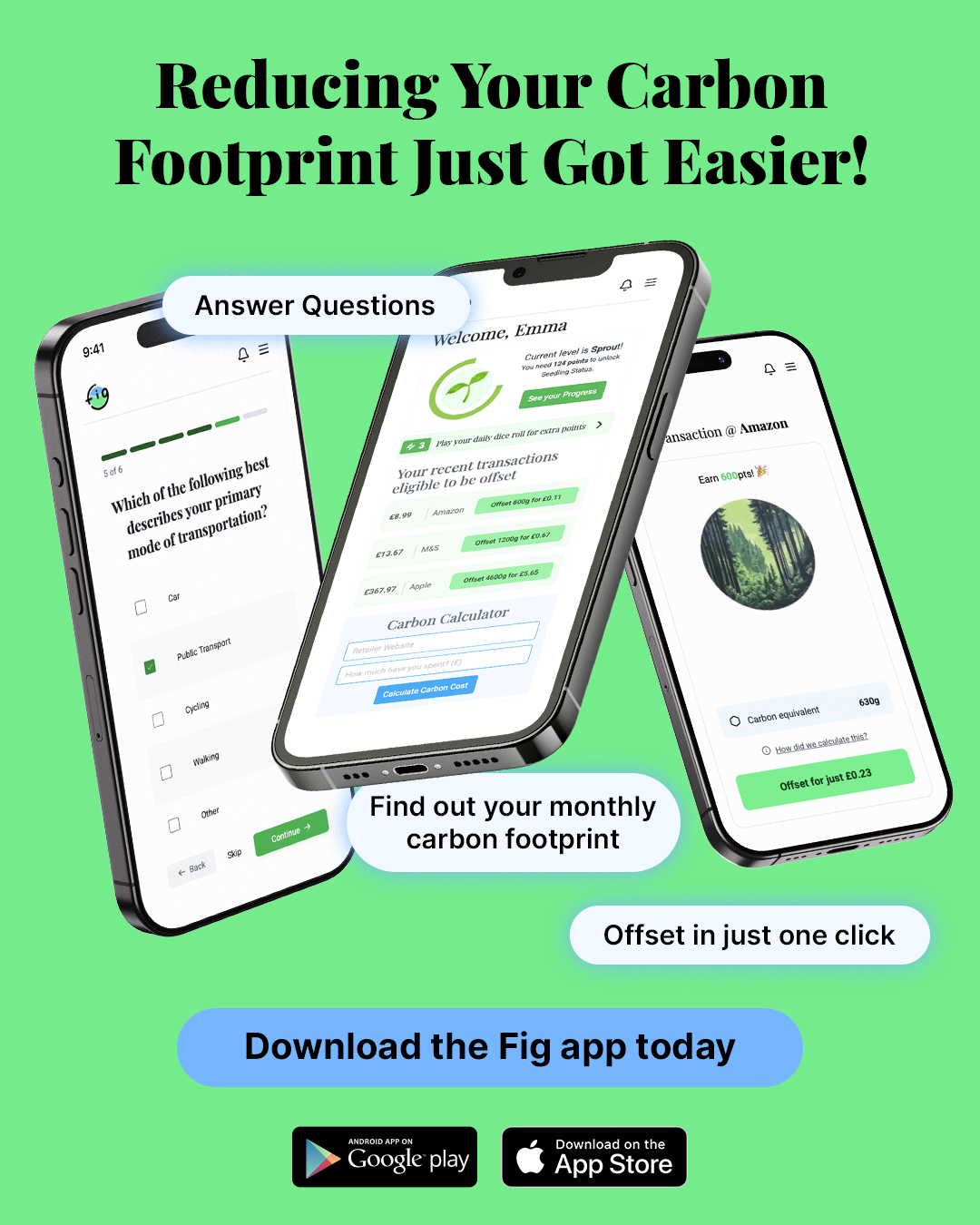
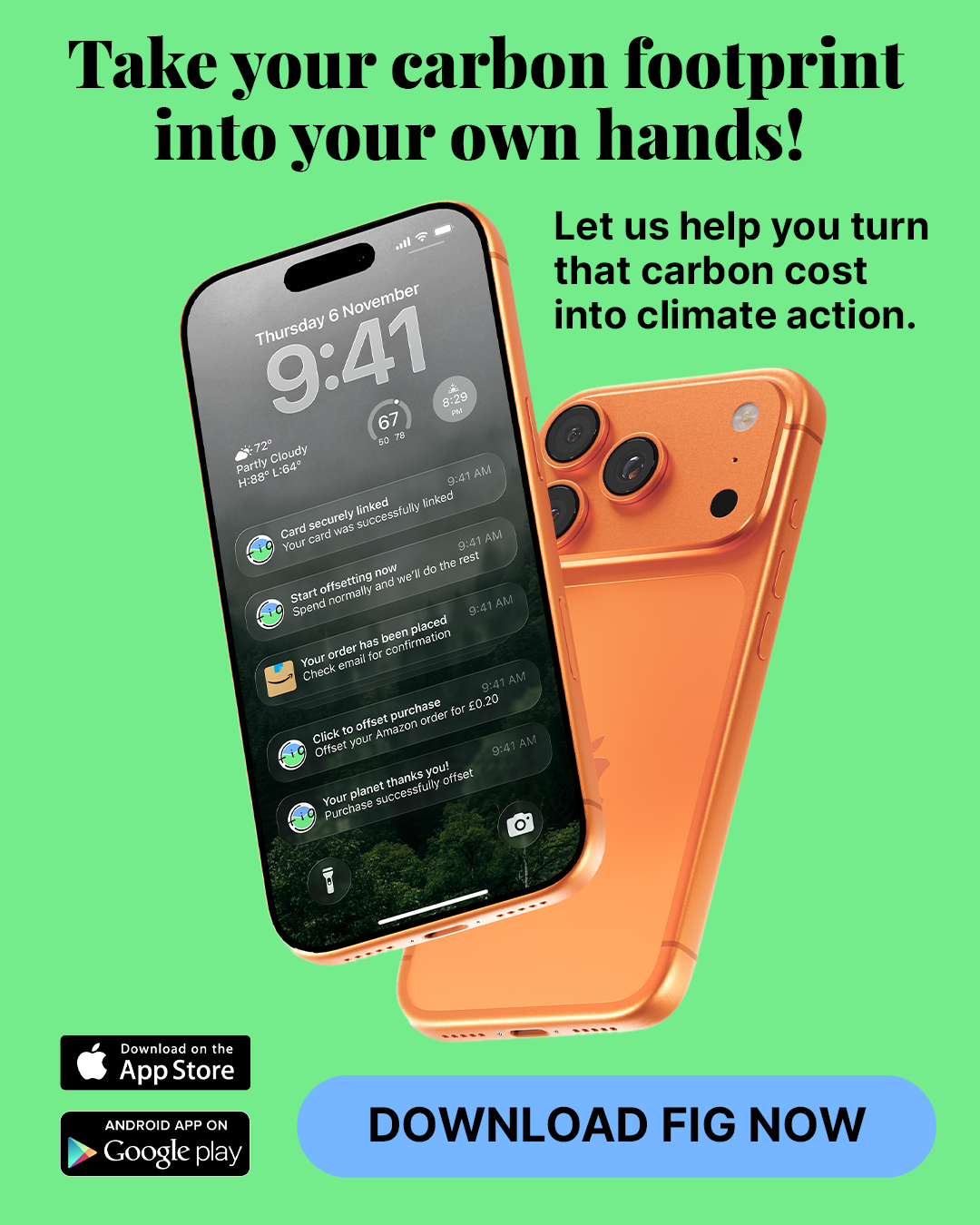
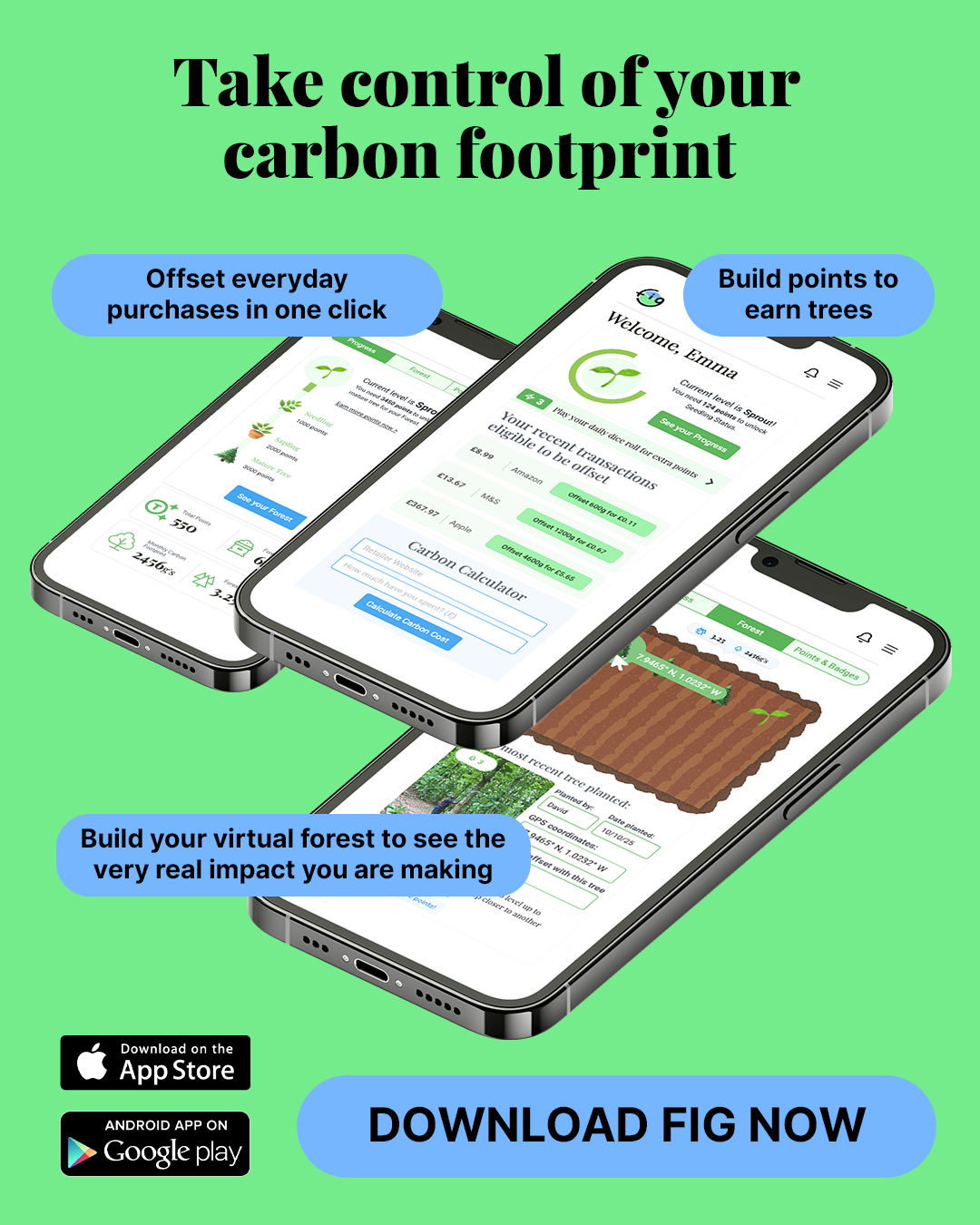
Ad sets built to be tested.
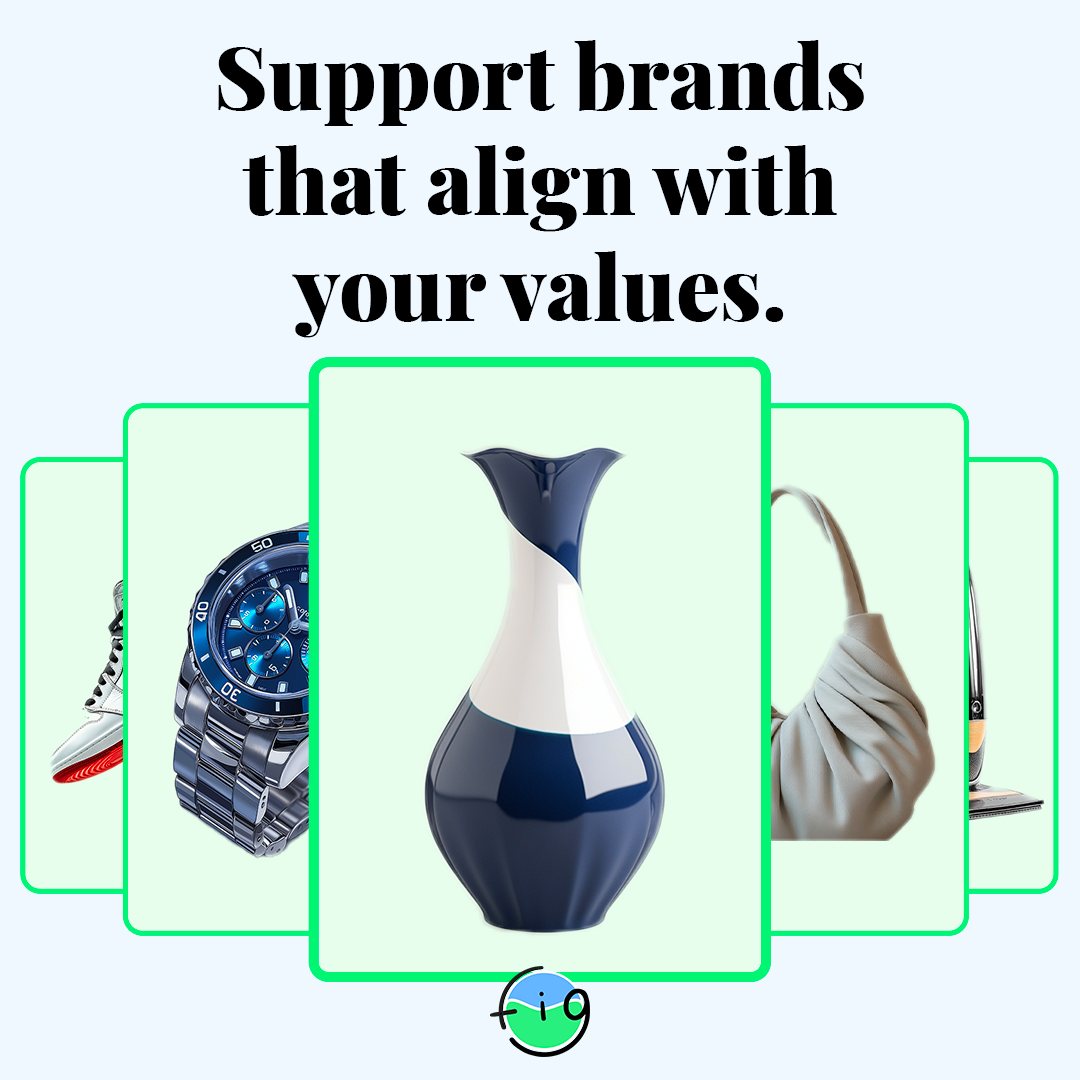
Rather than betting on one hero creative, we built the campaign as distinct concepts, each leading with a different reason to care, then let spend follow whatever the audience actually clicked. Ad Set 2 ran as a three-scene carousel:
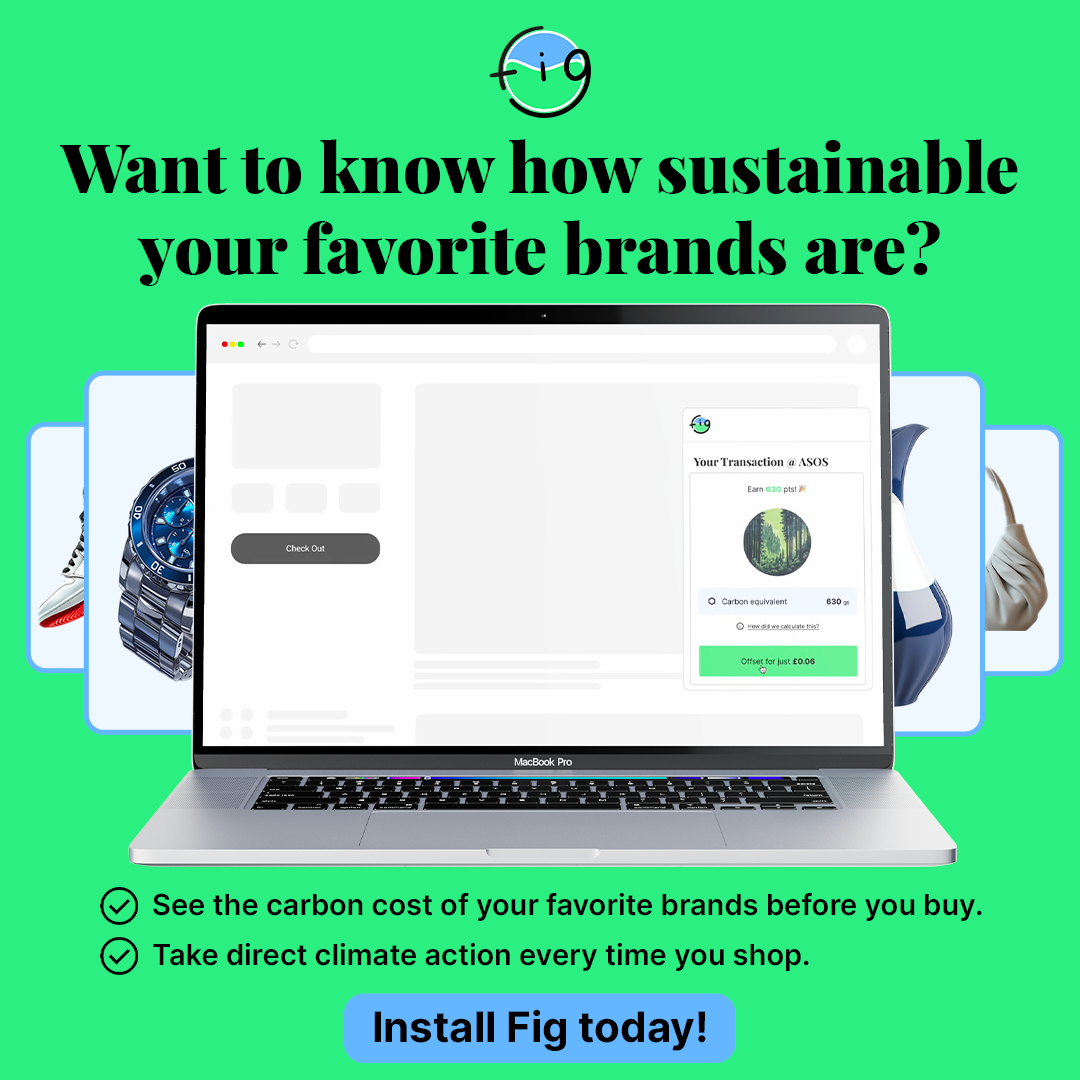
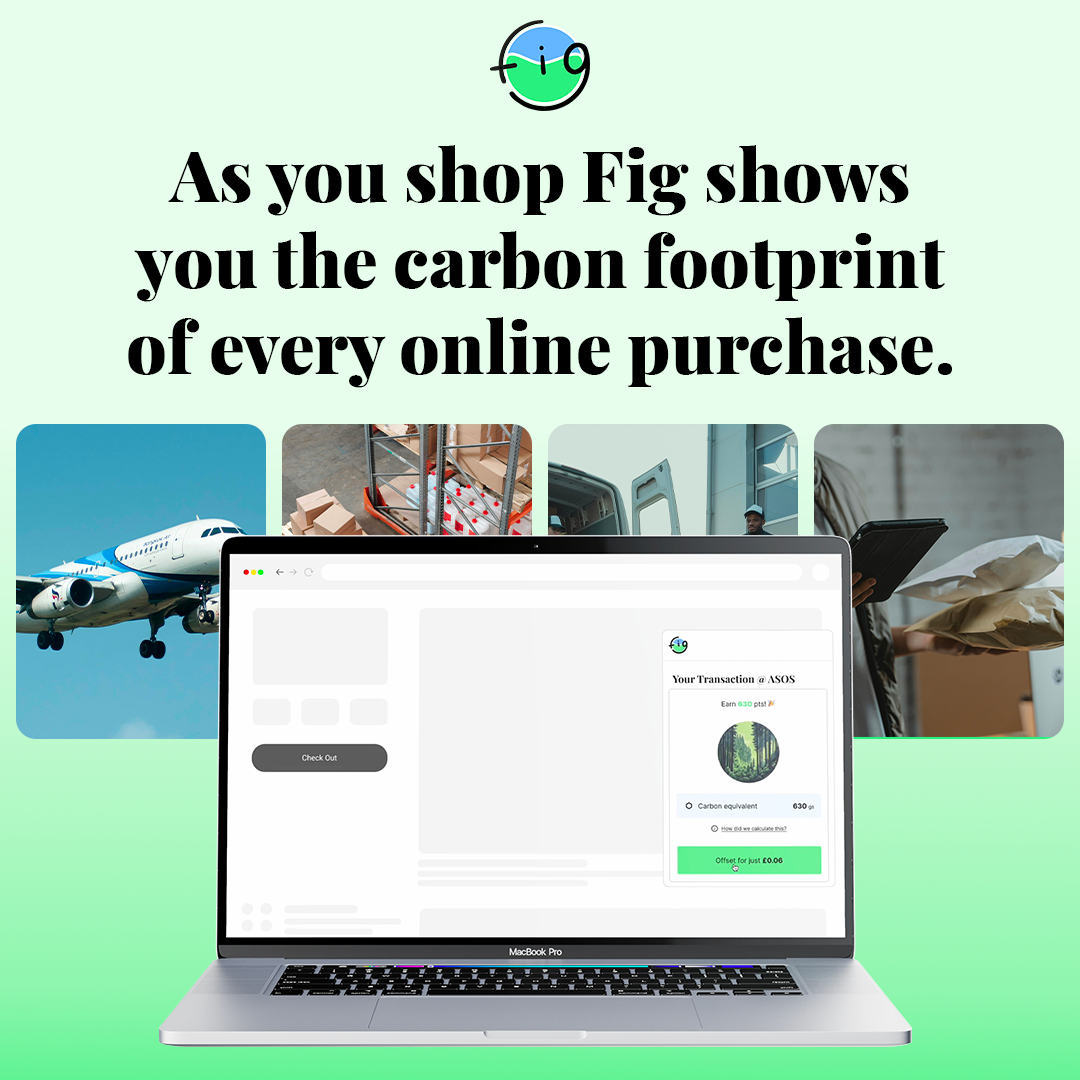
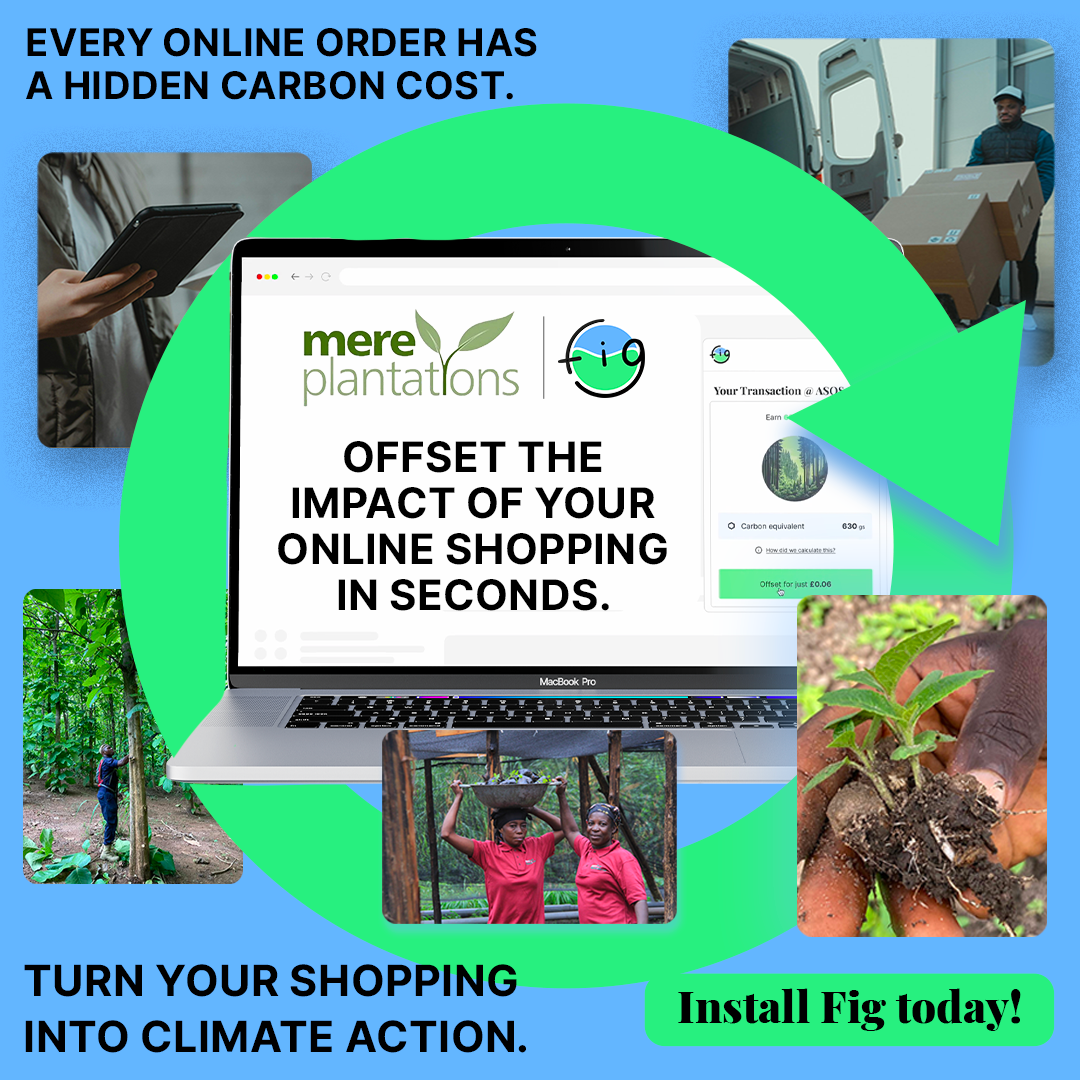
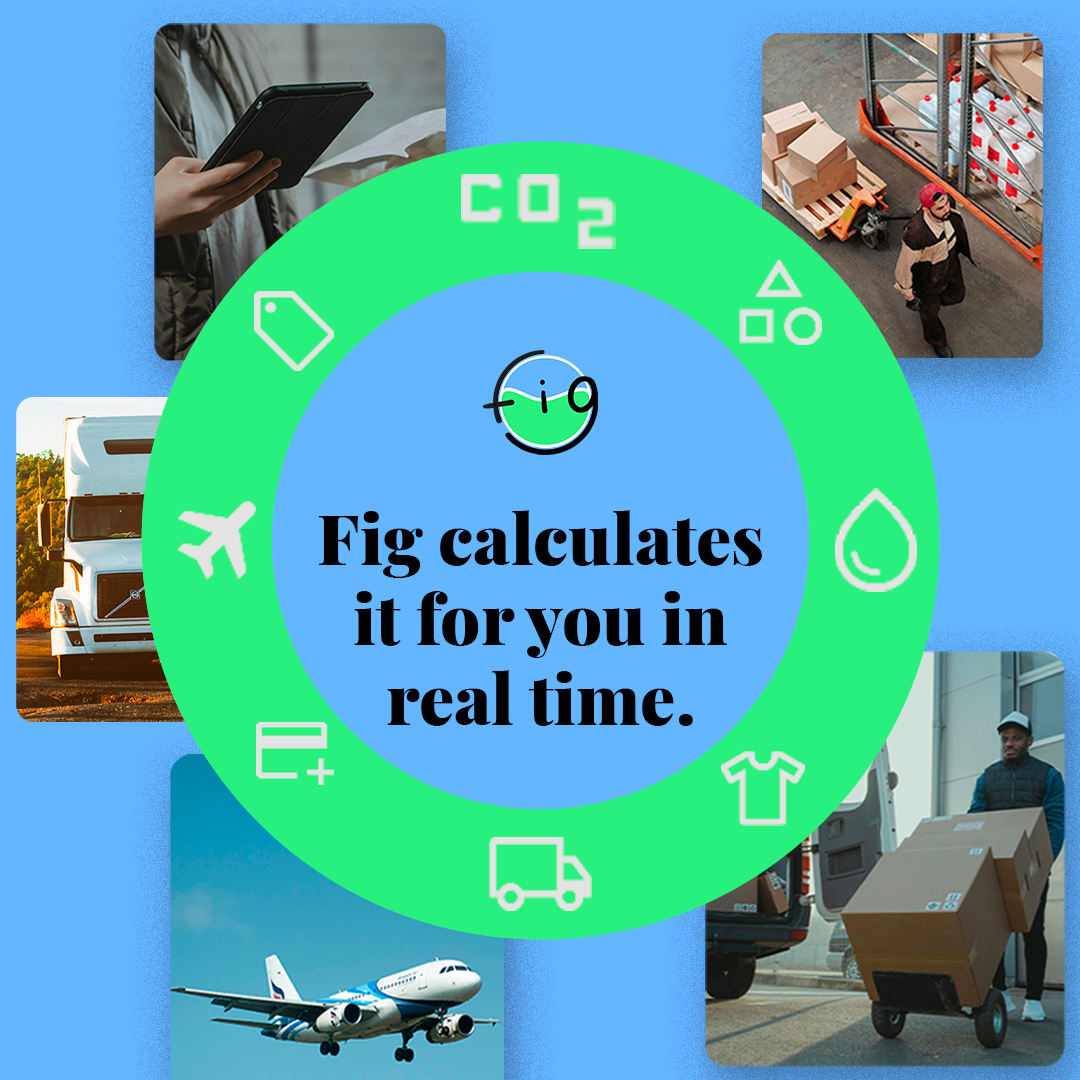
Ad Set 1 led with the hidden cost of every order, and the real-time calculation that answers it:
A full display suite, every standard slot.
Leaderboard, skyscraper, rectangle and mobile banner. One creative system stretched to every standard ad size, so Fig could show up wherever the audience already was.
Cut for the platforms that convert.
The film re-cut to platform-native shapes: a vertical spot for mobile feeds and a 4:3 for Reddit, each built to earn the install in the first few seconds.
The result.
+1,071%
App download rate increase, week 1 to week 4
−84%
Cost per download reduction across the campaign
£0.89
Cost per download by week 4 (down from £5.48 in week 1)
916
Total installs across the four-week campaign
Cost per download, week on week
Week 1
£5.48
Week 2
£4.04
Week 3
£2.90
Week 4
£0.89
Each weekly review reallocated spend toward what was working. By week 4, the campaign was running at roughly a sixth of its opening cost.
The Questionnaire and Linking Cards ad sets drove the majority of installs, at £1.57 and £1.36 per download respectively on Android. The two gamification concepts underperformed by comparison: Simple Gamification came in at £2.25 per download, Complex Gamification at £4.42. That gap told us something concrete about Fig's audience. They responded to the app's core utility, not game mechanics, and we shifted budget accordingly.
The Android campaign significantly outperformed iOS across every metric, at £1.70 versus £13.98 per install overall. Rather than burn budget chasing equivalence, we concentrated spend on Android after the first week of data, which is what made the final-week cost-per-download possible.
Beyond the numbers, Fig closed the campaign with a validated content and acquisition framework, a brand built to scale, and the performance data to back their funding-round conversations.